
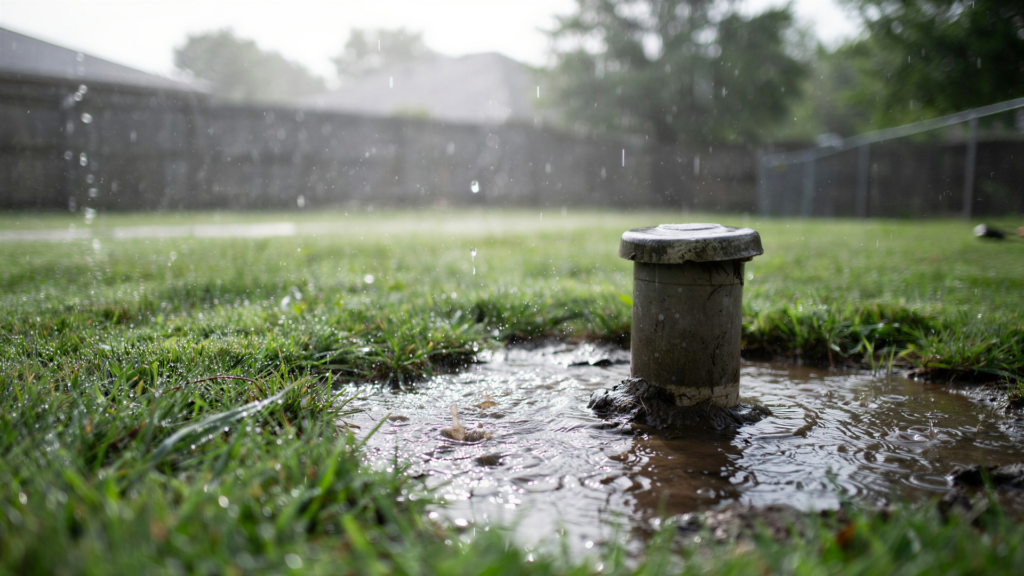
Heavy rainfall can be a welcome sight for lawns and gardens, but it is not always good news for your septic system. After a major storm, you may notice slow drains, standing water in the yard, or unpleasant odours around your septic area. While these signs do not always mean your system has failed, they should not be ignored.
Your septic system depends on the surrounding soil to filter and absorb wastewater. When the ground becomes saturated after days of rain, the system has a harder time doing its job. Below, we’ll cover why this happens, the signs of trouble to look for, and how to protect your system during periods of heavy rain.
Why Heavy Rain Can Slow Your Septic System
A septic system releases treated wastewater into the drain field, where it filters through the soil. During heavy rainfall, the ground may already be holding as much water as it can. As a result, wastewater has nowhere to go as quickly as it normally would.
This extra pressure can temporarily slow the system, especially if the soil drains poorly or the system is older. In some cases, heavy rain simply exposes an issue that was already developing rather than creating a new one.
Signs Your Septic System Is Struggling
Not every rainstorm causes septic problems, but it is important to watch for warning signs if wet weather continues.
Common signs include:
- Slow-draining sinks, tubs, or showers
- Toilets that flush more slowly than usual
- Gurgling sounds in your plumbing
- Wet or soggy patches near the drain field
- Sewage odours around the yard
- Water pooling near the septic tank
If these issues continue after the ground has dried, it is a good idea to have your system inspected.
What You Can Do During Wet Weather
Although you cannot control the weather, you can reduce the amount of stress placed on your septic system during periods of heavy rain.
Here are a few simple ways to help:
- Spread laundry loads over several days.
- Fix leaking faucets or running toilets.
- Limit long showers when possible.
- Avoid draining large amounts of water at one time.
Reducing water use gives your septic system more time to process wastewater while the soil gradually dries out.
Keep Surface Water Away from the System
Proper drainage around your property also plays an important role. Roof downspouts, sump pumps, and landscape drainage should direct water away from your septic tank and drain field whenever possible.
Parking heavy vehicles or equipment over the drain field should also be avoided, especially after heavy rain. Compacted soil makes it harder for water to move naturally and can reduce the efficiency of the system over time.
Routine Maintenance Makes a Difference
A well-maintained septic system is generally better prepared to handle changing weather conditions. Regular inspections, scheduled pumping, prompt repairs, and a properly planned septic system design all help keep every part of the system working as intended
If your septic system is ageing or has not been serviced in several years, heavy rainfall may highlight problems that have gone unnoticed. Addressing those issues early is often much less expensive than waiting for a complete system failure.
Stay Ahead of Septic Problems
Heavy rainfall can temporarily affect septic performance, but ongoing drainage issues or persistent odours usually point to a problem that needs attention. Acting quickly can help protect your property and extend the life of your septic system.
Whether you are dealing with post-storm septic concerns or want peace of mind before the next rainy season, Pioneer Septic Solutions is here to help. Contact our team today for reliable advice and professional solutions, whether you need septic system repair or are planning a septic system replacement.